Resin meets honey
Shilajit honey: a mountain resin, made easy
Shilajit honey is exactly what it sounds like: honey with shilajit resin blended in.
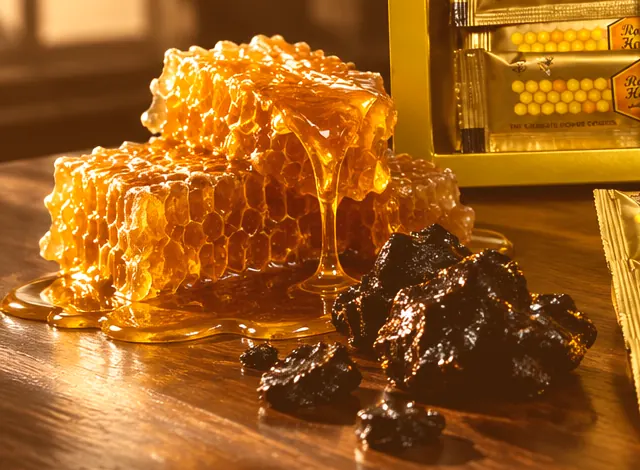

- Sealed box batch & expiry printed
- Free tracked shipping usually 6–10 working days
- 30-day money-back guarantee on every pack
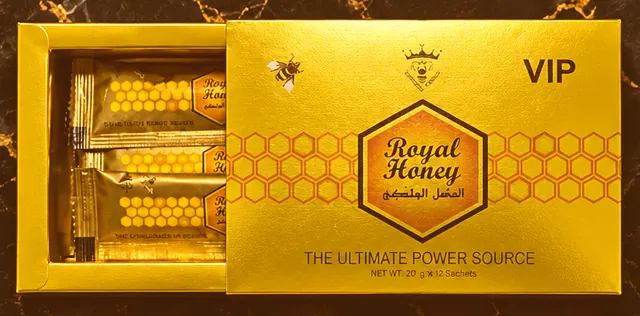
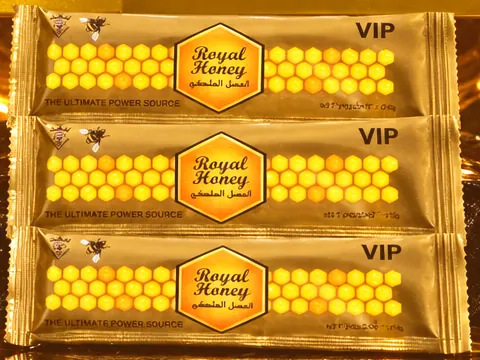
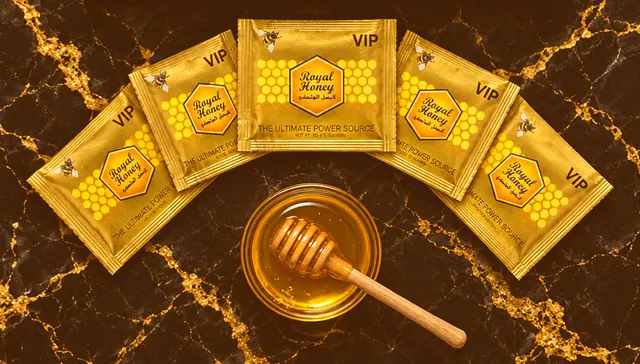
Product images are illustrative renders of the box.
The short answer
Shilajit is a dark mineral resin that forms in rock crevices in high ranges such as the Himalayas. Blended with honey it becomes easy to measure and far nicer to taste; our sachets portion it into 30 sealed servings a box.
The resin is dark, bitter and sticky; the honey makes it easy to portion and pleasant to take. Here's what shilajit actually is, why the two are paired, and whether sachets or a jar suit you better.
- What shilajit is
- Why it's paired with honey
- Sachets vs jar
- Himalayan shilajit resin
- Blended into honey
- 30 sealed sachets a box
The basics
What shilajit honey is, in one paragraph
On its own, shilajit is a thick, near-black resin with a smoky, bitter taste. It's awkward to measure: too sticky to pour, too hard to spoon when cold. Honey solves both problems. Stir the resin into honey and you get a dark, glossy paste that dissolves in a warm drink and can be portioned one serving at a time.
That's the whole idea behind the blend. Brands differ in how much resin they use, where it comes from and how it's processed, so the label matters more than the name. Our sachets are honey blended with Himalayan shilajit resin, 30 sealed servings to a box.
Shilajit, the resin itself
The short version of what reference sources say, with no claims attached.
Where it's found
Rock crevices and caves high in mountain ranges, including the Himalayas, the Altai and the Caucasus.
How it forms
Mainly from plant matter breaking down slowly over a very long time, trapped and compressed in rock.
What it contains
Mostly humic substances such as fulvic and humic acids, plus a range of minerals.
Traditional use
Part of traditional practices including Ayurveda and Tibetan medicine for centuries.
What it looks like
Very dark brown to black, glossy, tar-like when warm and brittle when cold.
Why together
Why shilajit and honey get blended
The pairing is mostly practical. Shilajit resin is strong-tasting and hard to portion; a pea-sized piece is a typical serving in jars, and getting it consistent day to day is fiddly. Honey dilutes the taste, smooths the texture and turns an unpredictable lump into a measurable amount.
Honey is also a stable carrier. With little water and natural acidity, sealed honey keeps for a long time, which suits a product meant to sit in a cupboard for weeks. And because honey dissolves in warm liquid, shilajit and honey together go into tea or warm milk without the resin clinging to the spoon.
The background on the resin is summarized well in Wikipedia’s shilajit entry. For how each ingredient appears on a label, see our guide to honey pack ingredients.
Shilajit honey sachets vs a jar vs pure resin
Three ways the same two ingredients reach a kitchen. None is wrong; they suit different habits.
| Sealed sachets | Jar of shilajit honey | Pure resin + your own honey | |
|---|---|---|---|
| Portioning | Done for you, one sachet per serving | Spoon by eye each time | Weigh or guess a pea-sized piece |
| Freshness after opening | Each serving sealed until used | Jar opened daily, exposed to air and spoons | Resin keeps well; honey jar as usual |
| Travel | Fits in a pocket or wash bag | Sticky, breakable, bulky | Two containers to carry |
| Taste | Pre-blended, smoother | Pre-blended, smoother | Strong; you control the mix |
| Label clarity | Batch and expiry on the box | Varies by brand | Two separate labels to check |
| Typical cost per serving | From $0.89 with our 10-box pack | Varies widely | Varies widely |
First taste
What to expect when you open a sachet
First-time buyers are sometimes surprised by the color. Plain honey is golden; honey with resin stirred through it runs from deep amber to almost espresso-dark, depending on how much resin is in the blend and the honey used. That darkness comes from the resin, and it's expected.
The smell is the second surprise. Shilajit has an earthy, slightly smoky note that some people compare to dark tea or molasses. In a warm drink it fades into the background; straight from the sachet it's more noticeable. If you aren't sure you'll like it, start with half the sachet stirred into warm milk, then finish the rest the same day once you know.
Texture changes with temperature. A sachet from a cold car or a winter mailbox can feel almost solid. Hold it in your hand for a minute, or stand it in a glass of warm water, and the blend loosens. Graininess is the honey crystallizing, which is normal and not a sign of spoilage.
Value
How shilajit honey sachets are priced
Jars and resin pots are hard to compare with sachets because nobody agrees what a serving is. Sachets fix that: one sachet is one serving, so price per sachet is a fair yardstick. A single box of ours works out at $1.77 a serving; the largest pack takes that to $0.89, and delivery is free whichever you pick. Our honey pack price breakdown does the per-sachet maths for every pack.
When comparing against other brands, check the label as well as the price. Our comparison of honey pack brands sets out what the FDA has said about the best-known names in the category.
Himalayan shilajit honey
What "Himalayan" tells you, and what it doesn't
"Himalayan" names the source region of the resin. It's the origin you'll see most often on himalayan shilajit honey labels, partly because the Himalayas are among the best-known shilajit ranges and partly because the word sells.
What it doesn't tell you is the amount of resin per serving, how it was cleaned, or who packed the product. Those answers come from the full label and from the seller. On our box the ingredient list, the amount to take, the batch and the expiry are printed, and we answer questions about them by email.
A label worth trusting names the resin, prints a batch, and lets you reach the people who sold it.
Choosing a shilajit honey product
The same checks work for a jar, a sachet box or a resin pot.
- Shilajit is named on the ingredient list, with its form (resin, extract or powder).
- The amount to take is printed, not left to guesswork.
- The product is sealed and carries a batch number and expiry date.
- There's an allergy note for honey and bee products and an adults-only note.
- Claims stick to ingredients and directions; no promises of results.
- The brand isn't named in FDA notices on tainted honey products.
- You can name and email the seller.
Shilajit honey: common questions
Does it taste like normal honey?
It's darker and earthier. The honey comes first, with a smoky, slightly bitter finish from the resin. Warm milk or tea softens it.
Is shilajit honey the same as a honey pack?
Many honey packs are shilajit honey in sachet form, but not all: some use herbal extracts instead or as well. Read the label. Our honey pack explainer covers the category.
How should I take a sachet?
Take the amount printed on the box, straight or stirred into a warm drink. Our directions page walks through it.
Who should avoid shilajit and honey?
Our sachets are sold to adults only. Skip them entirely if bee products give you a reaction, and keep honey of any kind away from infants. Pregnancy, breastfeeding, regular medication or an ongoing condition all mean a conversation with your doctor comes before the first sachet.
Does it need the fridge?
No. Keep sachets in the closed box, somewhere cool and dry. Cold makes the blend stiff.
Shop
Shilajit honey in sealed sachets
Pick a box count: one for a first try, three as the default, five or ten to bring each serving down toward $0.89. Every pack ships free and tracked, with 30 days to change your mind.
- Sealed boxBatch number and expiry printed on every box. Our own stock, not drop-shipped.
- Free tracked shippingShips within 24 hours. US delivery by express courier, usually 6–10 working days.
- Held by customs?If a parcel is held by customs, you get a refund.
- 30-day money-backEvery pack carries a 30-day money-back guarantee. One email starts it.
Ready when you are
The resin, already portioned
Sealed boxes of shilajit honey sachets, shipped from our own stock within 24 hours. Delivery across the US usually takes 6–10 working days.